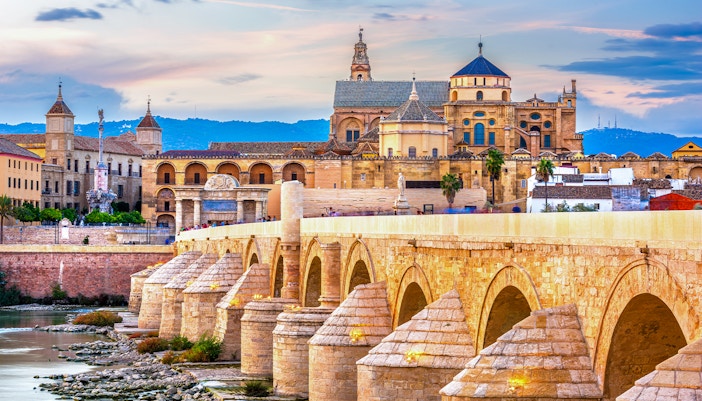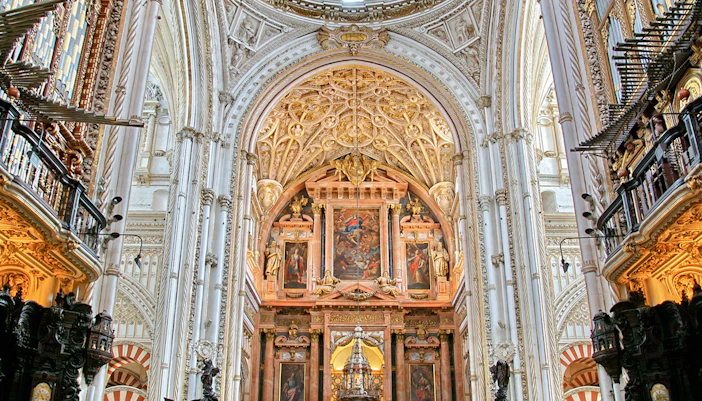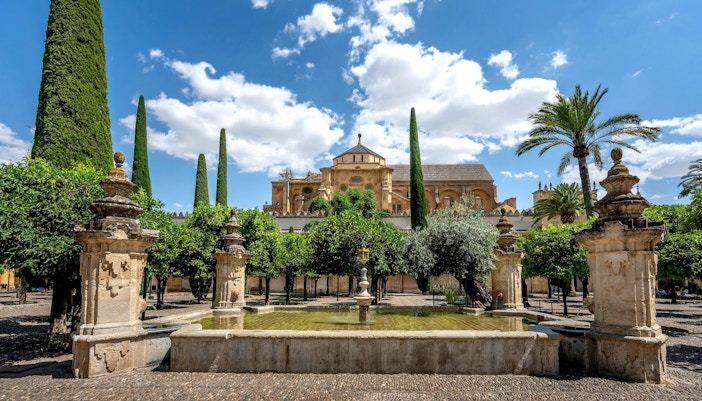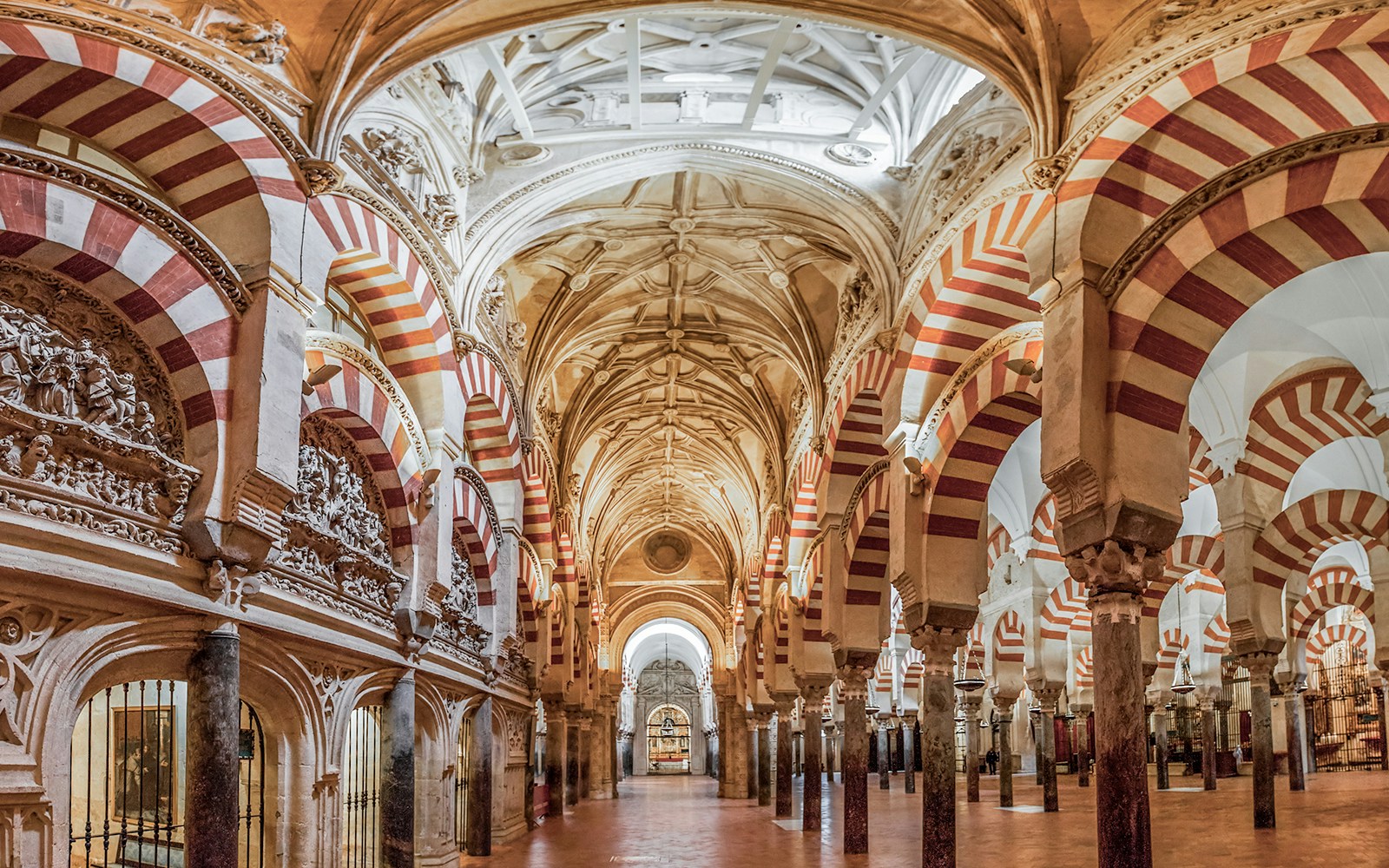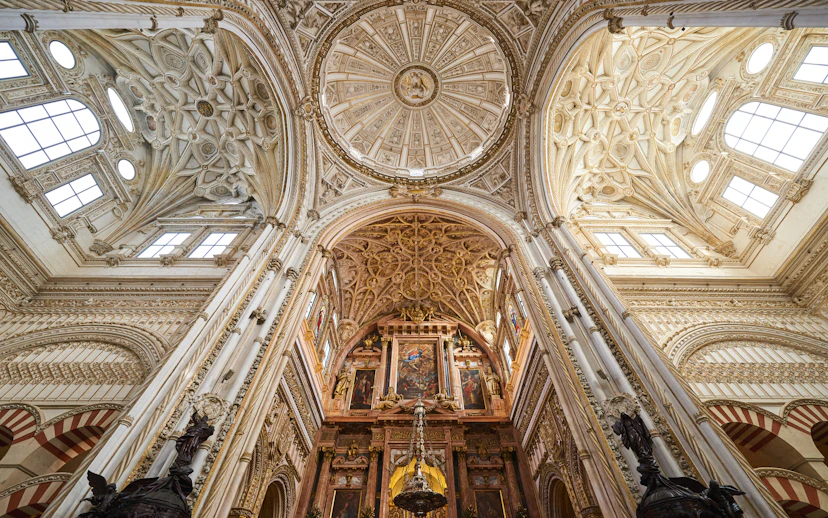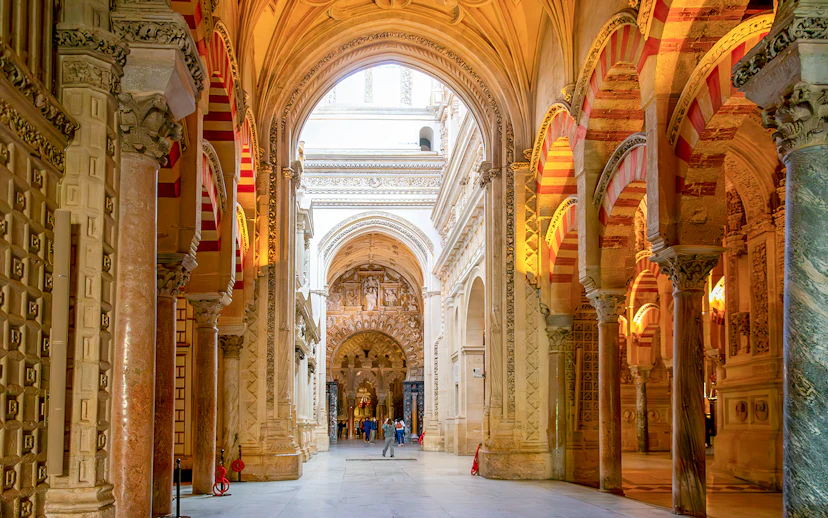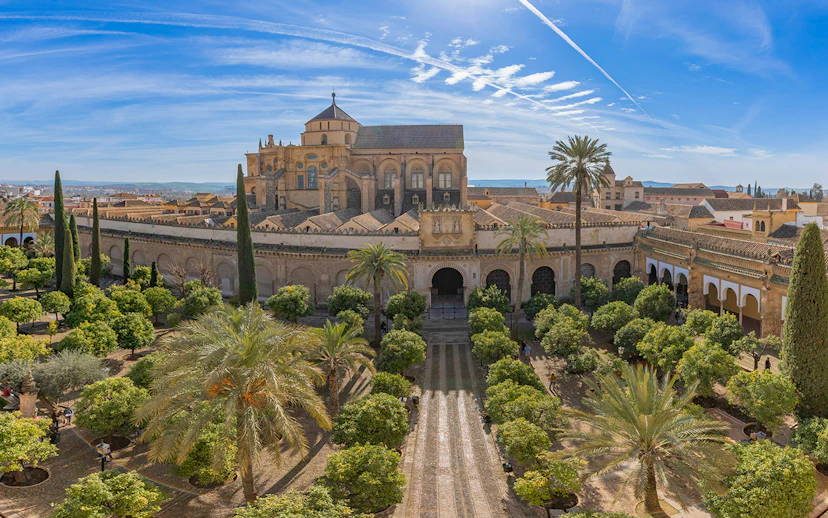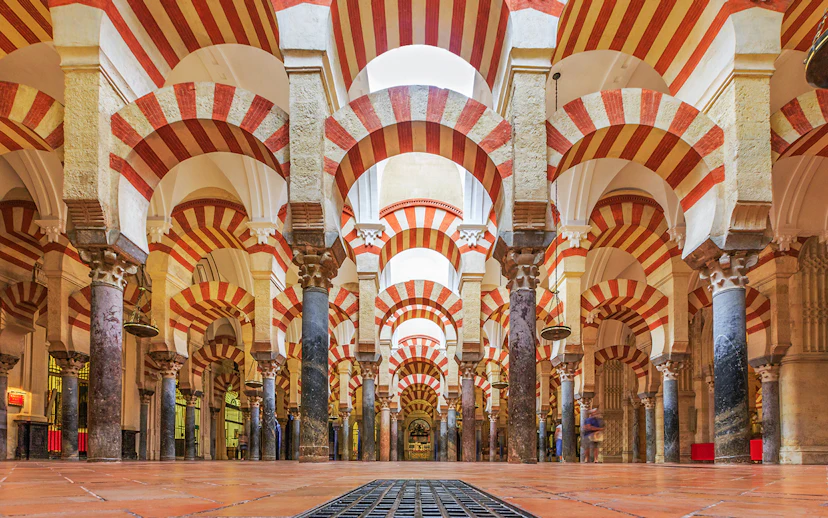
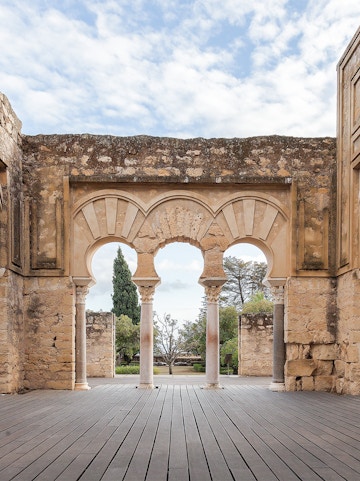

The first weekday slot gives you the clearest view through the arches before guided groups gather near the mihrab and cathedral nave. Late morning feels denser and visually flatter. If photos and quiet matter, don’t aim for midday.
Quick overview
- Access: Included in all Cordoba Mosque-Cathedral tickets
- Separate ticket: Not required
- When you’ll see it: Start of the interior route, just after the courtyard entrance
- Visit duration: 20–30 mins self-guided/45–60 mins with guide
- Best time: First weekday entry slot; sightlines are clearer, and tour groups are thinner
- Restrictions: Covered shoulders and knees required; tripods, selfie sticks, and large bags are not allowed
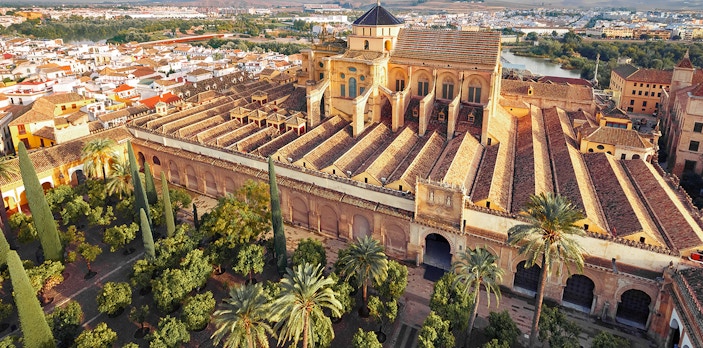
The Prayer Hall of the Great Mosque of Córdoba is included with all Cordoba Mosque-Cathedral tickets. No separate ticket is needed. It sits at the heart of the monument’s interior and is reached almost immediately after you enter from the courtyard, but it cannot be visited on its own. Book a guided tour or an entry with an audio guide if you want the arches, mihrab, and later cathedral insertion to make visual sense from the start.
How to best experience the Prayer Hall
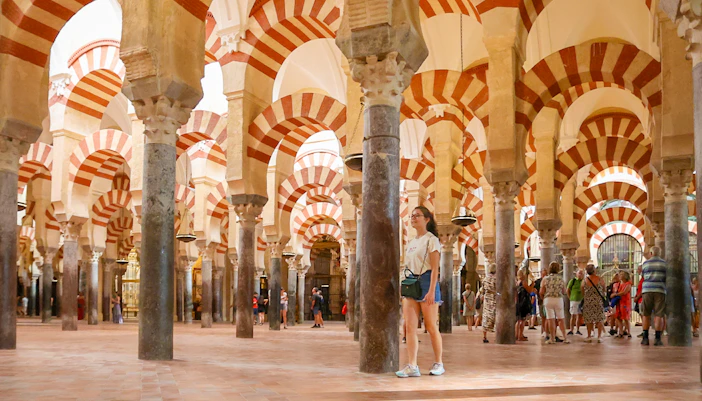
Best time to visit
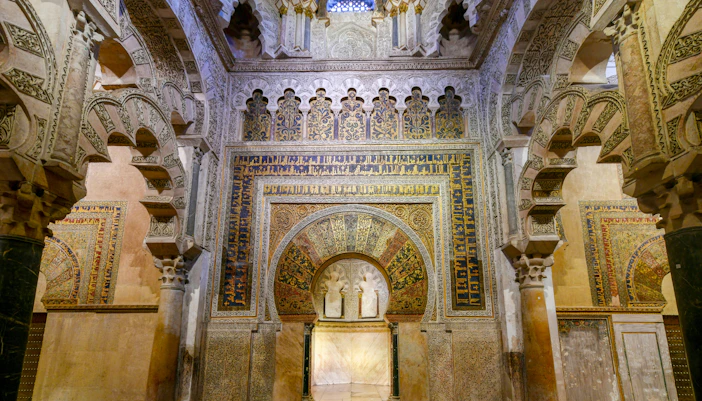
How long to spend
Self-guided: allow 20–30 minutes to walk the main aisles, pause at the mihrab, and read the cathedral’s insertion. With a guide, 45–60 minutes is more realistic. If you rush, the hall can feel repetitive instead of revealing.
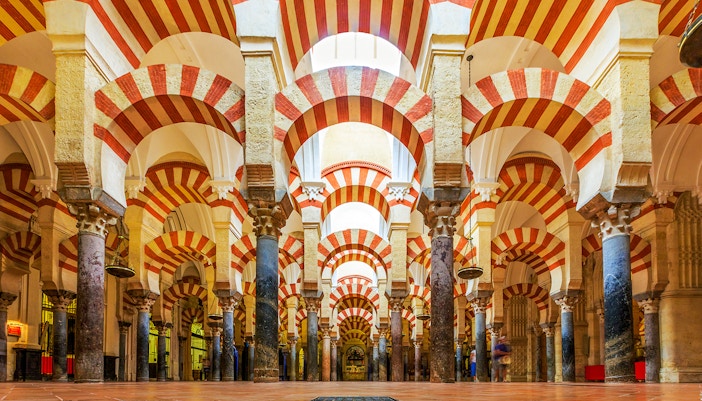
Where it fits in your itinerary
You reach the prayer hall almost immediately after entering, so it deserves your freshest attention. See it before drifting into chapels, the patio, or the bell tower. If you leave it to the end, you’ll notice less and backtrack more.
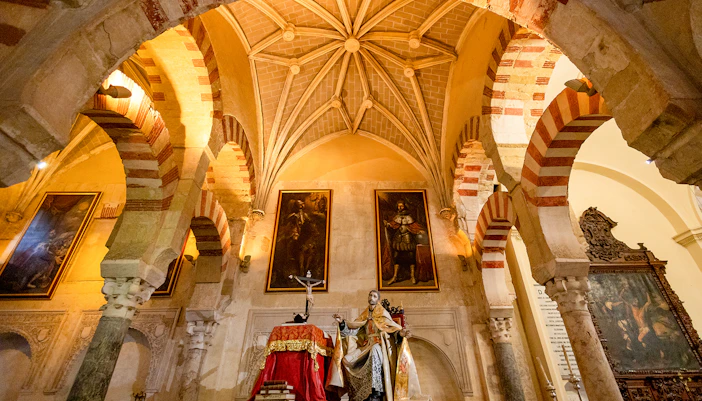
Crowd patterns
Crowds build fastest from about 11am, when city tours and day-trippers converge on the mihrab and central nave. Early entry gives longer sightlines and quieter acoustics. If you want clear views through the columns, avoid late-morning bottlenecks.
What to prioritize if time is short
If you only have 10 minutes, stand where the striped arches frame the cathedral nave, then move straight to the maqsura and mihrab. Those two stops explain the monument’s logic. Don’t spend limited time circling every side chapel.
Common mistakes to avoid
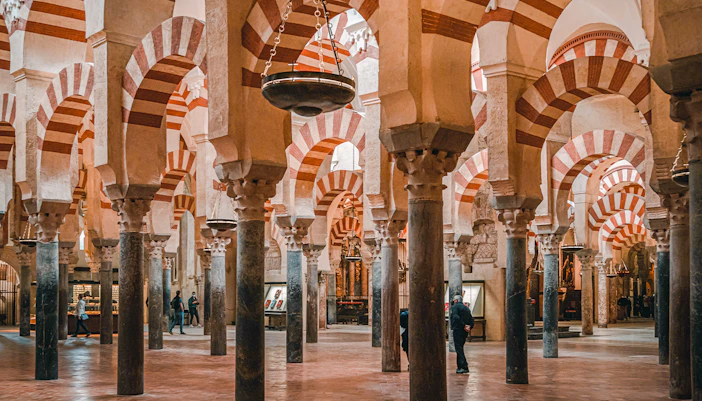
Most visitors follow the brightest central aisle and miss how the side aisles change the rhythm of the columns. Zigzag at least once, and look back toward the nave. Also, dress respectfully so you’re not delayed at entry.
Best tickets to experience the prayer hall
| Ticket type | Why choose it |
|---|---|
Standard entry with audio guide | Best if you want to linger under the arches at your own pace and replay commentary near the mihrab. |
Skip-the-line guided tour | Best for first-timers who want the prayer hall decoded quickly without losing time at the entrance. |
Guided city combo | Good if the prayer hall is part of a larger Córdoba day and you want stronger citywide historical context. |
Why it’s worth seeing
What makes the prayer hall irreplaceable is not one object, but the way the arches keep multiplying until the room stops behaving like a normal church or mosque interior. Most first-time visitors don’t realize the cathedral nave was inserted into the middle of an already complete forest of columns. Once you know that, the space reads less like decoration and more like layered history. Start with these three details.
The striped arches
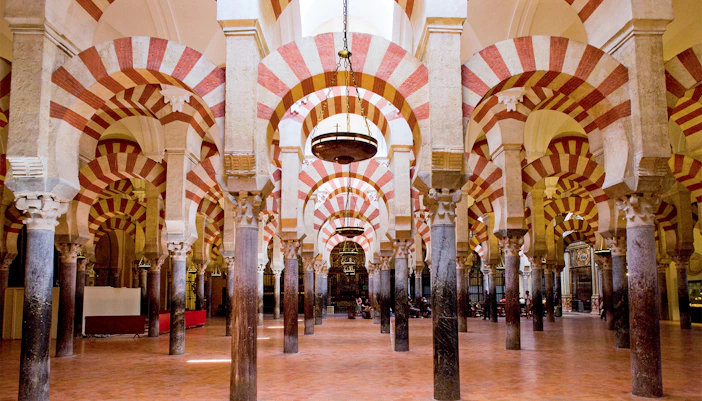
Stand a few rows back from any central aisle and look diagonally, not straight ahead. The red-and-white double arches were designed to gain height from reused columns, and the diagonal view shows their repeating rhythm best.
The mihrab and maqsura
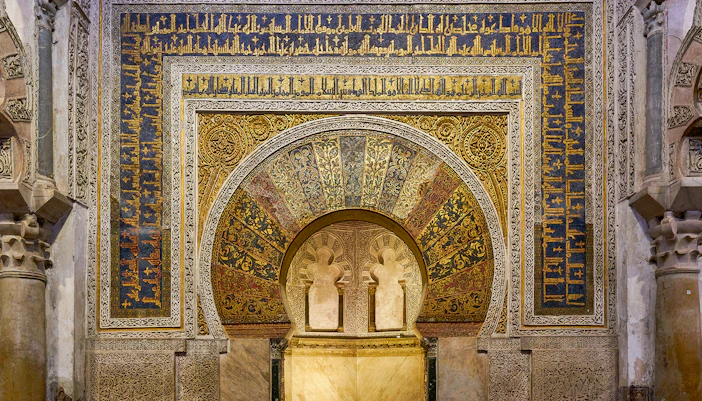
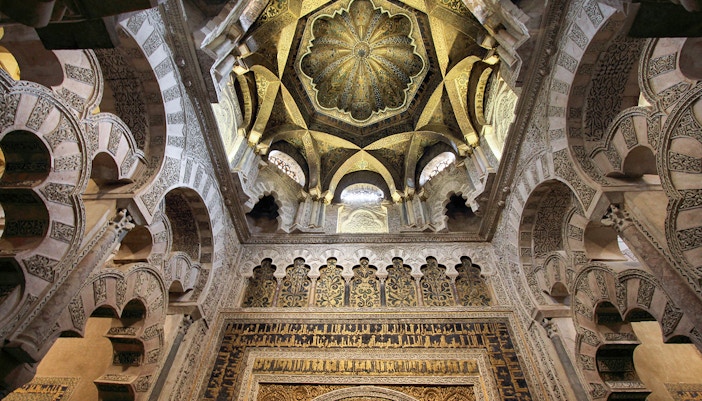
Move toward the qibla wall and look for the richly ornamented zone just before the mihrab. Gold mosaic, interlaced arches, and dense carving mark the most sacred focus of the former mosque.
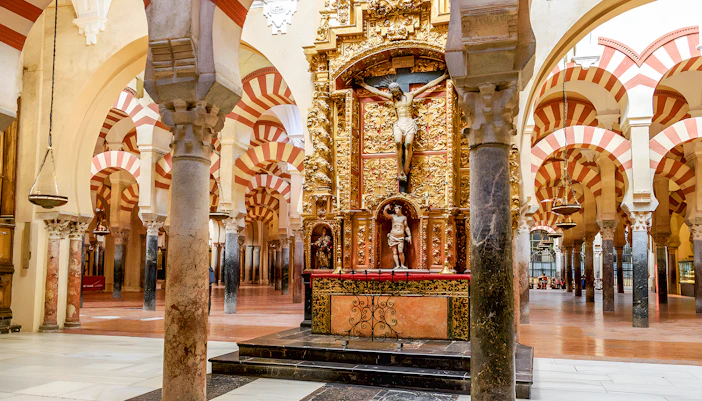
The cathedral insertion
From near the middle of the hall, turn toward the soaring Renaissance nave that breaks the low, horizontal rhythm. This is the clearest place to understand how Christian additions transformed, rather than erased, the earlier space.
Historical and cultural significance
What many visitors miss is that the prayer hall was not built once, but expanded in stages from 784 under Abd al-Rahman I to the 10th-century works of al-Hakam II. It began as the congregational mosque of Umayyad Córdoba, then became part of a Catholic cathedral after 1236. Today, it remains an active religious monument, which is why silence, dress, and visitor conduct still matter inside the hall.
Notable figures
Abd al-Rahman I | Founder
Started the mosque in 784, establishing the first prayer hall and courtyard.
View Wikipedia
Al-Hakam II | Caliph
Oversaw the 10th-century expansion and commissioned the sumptuous mihrab mosaics.
View Wikipedia
Almanzor | Ruler
Ordered the final major eastward expansion, widening the prayer hall dramatically.
View Wikipedia
Hernan Ruiz I | Architect
Worked on early Christian alterations after the cathedral chapter reshaped the interior.
View Wikipedia
Know before you go
- Timed entry: Standard daytime visits use a booked time slot.
- Free morning visit: Monday to Saturday, 8:30am–9:30am, subject to religious schedule and capacity.
- Night visit: ‘El Alma de Córdoba’ runs separately on select evenings and needs its own ticket.
- Changes: Opening days and times may be modified on special-event or liturgical days.
Address: Calle Cardenal Herrero, 1, 14003 Córdoba
- Nearest bus: Lines 4, 5, 6, and 7 stop about 5 minutes away on foot.
- Entry point: Enter through the visitor access by the Patio de los Naranjos.
- Time to reach the hall: Once inside, you reach the prayer hall in about 5 minutes.
- Direct access: No separate entrance exists; the hall is part of the main monument route.
- Wheelchair access: Yes, the monument is wheelchair accessible except for the bell tower.
- Strollers: Stroller access is available on guided-tour products.
- Accessible restrooms: Disability-friendly restrooms are available on site.
- Service animals: Guide dogs are welcome.
- Physical effort: The prayer hall itself is mostly flat, with no major climb required.
- Required: Shoulders and knees must remain covered inside this religious monument.
- Not permitted: Sleeveless tops, tank tops, shorts, and very revealing clothing.
- Headwear: Hats and caps may be restricted inside the monument.
- Context: Dress rules apply to all visitors, not only worshipers.
- Enforcement: Staff can stop entry if clothing does not meet site rules.
- Tripods and selfie sticks: Not allowed inside the monument.
- Large items: Large bags, suitcases, and bulky baggage are not permitted.
- Food and drink: Eating, drinking, and smoking are prohibited inside.
- Conduct: Touching objects and running inside the monument are not allowed.
- Photography: Rules can vary by ticket type, so follow the instructions on your ticket and all staff directions on site.
Frequently asked questions about the prayer hall
Yes. Entry to the prayer hall is included with every valid Cordoba Mosque-Cathedral ticket. No separate ticket exists.
No. Any Mosque-Cathedral ticket gets you in. Guided and audio guide options simply change how much context you get once inside.
No. The prayer hall has no independent entrance. You enter through the Mosque-Cathedral and reach it from the main visitor route.
You reach it almost immediately after entering the main interior. Most visitors are inside the hall within 5 minutes of passing the courtyard entrance.
Allow 20–30 minutes self-guided, or 45–60 minutes with a guide. The mihrab, maqsura, and cathedral insertion reward slow looking.
Yes. Guided tours include the prayer hall, where a guide helps decode the arches, mihrab, and later cathedral additions.
Yes. Shoulders and knees should be covered because the monument remains an active religious space. Sleeveless tops and shorts can cause issues at entry.
Tripods and selfie sticks are not allowed. Photo rules can vary by ticket type, so follow the instructions on your ticket and staff guidance inside.
Yes. The prayer hall is largely flat and wheelchair accessible. The main accessibility limitation at the monument is the bell tower, not the hall itself.
Start where the striped arches frame the cathedral nave, then continue to the mihrab and maqsura. That sequence explains the room fastest.