Budget about 85–90 minutes door to exit. The performance itself lasts 70 minutes, but you’ll want buffer for entry, seating, and a brief linger afterward. If you’re tight on time, the shortest workable version is arriving early, seeing the show, and heading out straight after.
Quick Information
TICKETS
From $21.24
Is Cordoba Equestrian Show worth visiting?
The first thing you notice is the sound: hooves striking the arena floor under brick vaults, then a pause as the horses collect themselves and the whole ring seems to hold its breath. The Royal Stables feel close and enclosed, so even a seated show has the charge of something happening right in front of you.
That intimacy matters because this performance is rooted in the place where Córdoba’s horse tradition was shaped. It was built to present discipline, control, and elegance, not circus spectacle, and the setting gives the riding real historical weight.
The payoff is seeing Andalusian horsemanship as a living local art, with flamenco adding color rather than taking over. It’s worth your time if you want a compact evening experience with strong cultural texture.
Skip it if you want a big theatrical production, heavy flamenco content, or complete freedom to photograph the performance.
What will you see at the Cordoba Equestrian Show?
1/6
The Royal Stables arena
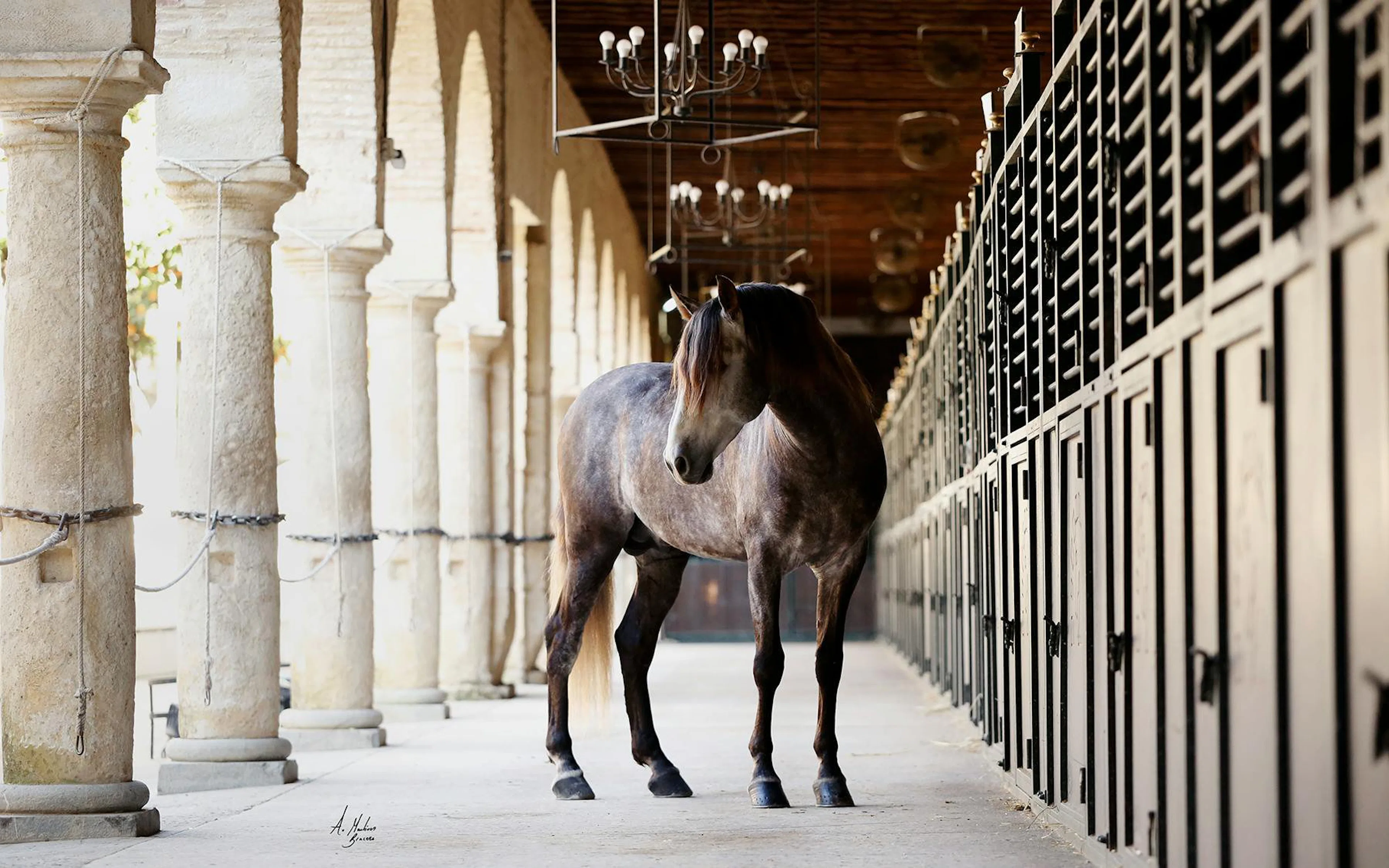
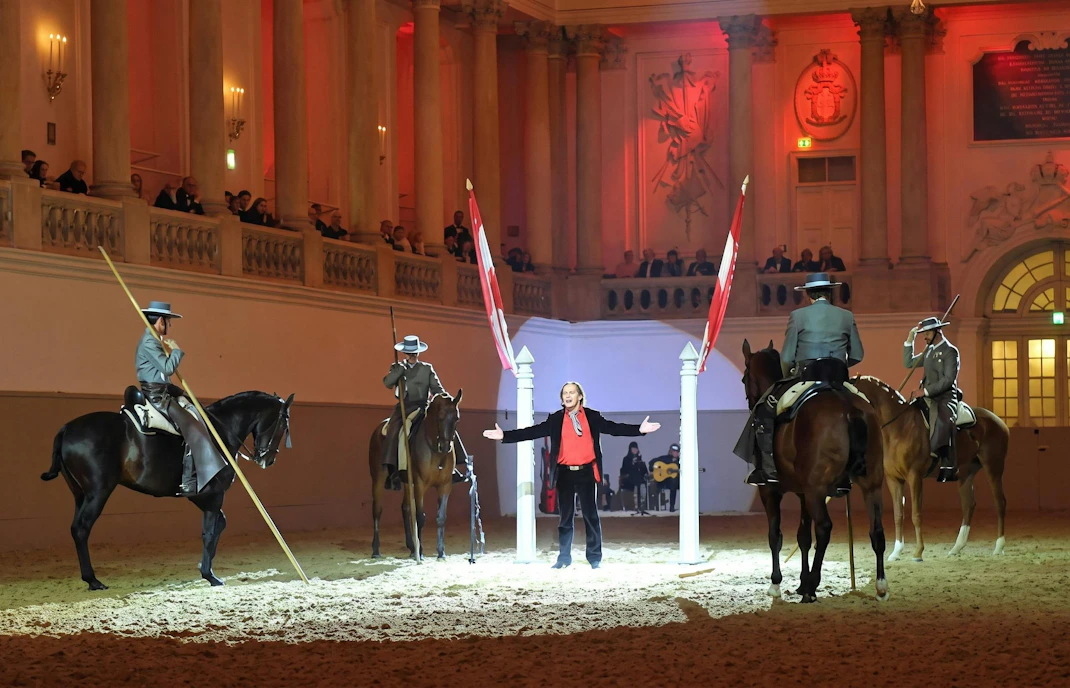
Brick arches, vaulted ceilings, and close-set seating make the venue feel more ceremonial than theatrical. The show gains much of its impact from this setting, so look up as often as you look at the ring.
Pre-show horse-viewing window
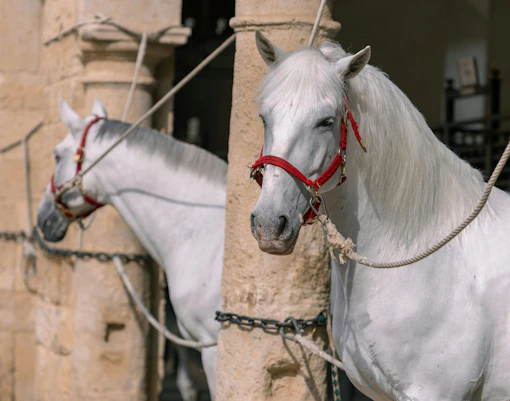
If you arrive early enough, the minutes before the performance can be some of the most rewarding. This is when the venue feels most like an active stable, not just a stage.
Classical dressage
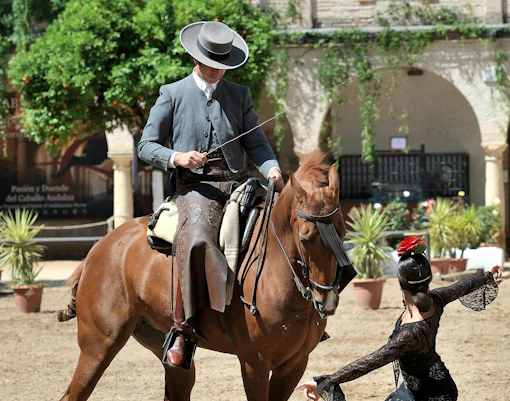
This is the technical core of the evening: collected steps, tight turns, and precise transitions that show how finely rider and horse are communicating. Even if you know nothing about dressage, the control is obvious.
Traditional Spanish riding
Expect passages that feel broader and more theatrical, with riders using the full ring rather than staying purely demonstrative. These sequences give the show pace and help break up the more formal dressage sections.
Flamenco moments
The flamenco component adds color, rhythm, and Andalusian atmosphere, but treat it as an accent, not a separate full-length show. That expectation shift matters; horse work remains the main event.
The finale
The closing sequences bring together speed, music, and synchronized movement in the most crowd-pleasing stretch of the show. Stay present for the ending rather than drifting toward the exits; it lands best when the arena is still focused.
Your complete guide to Cordoba Equestrian Show
How much time to spend?
Best visit order
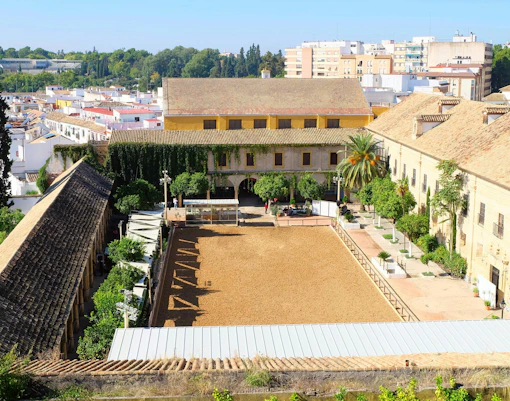
Start outside the Royal Stables on Calle Caballerizas Reales 1 before the doors-open window. Once inside, take any chance to look toward the stable-side areas before settling into the arena. After the show, pause briefly before leaving; the venue makes more sense once you’ve seen it in action.
Must-see highlights
- Must-see: the opening arena entrance, the classical dressage sequences, and the horse-and-rider coordination under the vaulted stables.
- Optional: a few extra minutes before or after the show to take in the building itself, which adds about 10–15 minutes.
Worth adding nearby
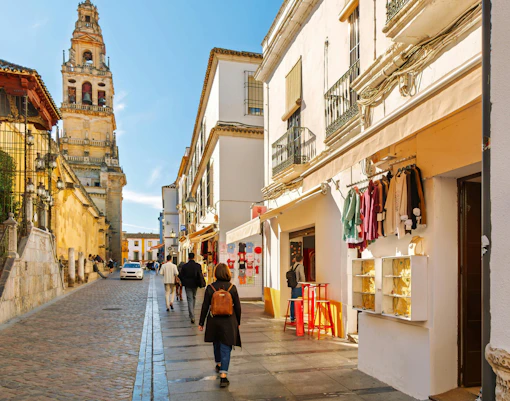
The Alcázar de los Reyes Cristianos is right next door, and the Mosque-Cathedral and Jewish Quarter are easy old-town pairings. Add 45 minutes for a quick stroll, or 2 hours if you’re folding the show into a full historic-center evening.
Brief history of the Cordoba Equestrian Show
- 1572: Philip II founds the Royal Stables of Córdoba to breed horses for the Spanish Crown, tying the site directly to the Andalusian horse tradition.
- 1734: A fire damages much of the complex, though key structural elements survive.
- Mid-18th century: The stables are rebuilt under Fernando VI, preserving the broad layout visitors still recognize today.
- 1842–1995: The complex serves as the headquarters of the Army Stallions depot, keeping its equestrian function alive for more than a century.
- Late 20th century: Córdoba Ecuestre begins using the site to present the city’s horse culture to the public through performance.
- Today: Pasión y Duende del Caballo Andaluz runs as a regular ticketed show inside the historic stables.
The Royal Stables: Architecture & setting
The Córdoba Equestrian Show takes place inside the historic Royal Stables of Córdoba, a 16th-century complex commissioned by Philip II for the breeding and training of royal horses. Today, the building provides a distinctive setting for the equestrian performance, bringing Andalusian horsemanship into a space closely connected to Spain’s equestrian heritage.
What does the venue look like?
The Royal Stables feature a historic interior with vaulted ceilings, stone columns, brick arches, and a central performance area. The traditional stable setting adds character to the show and creates a close connection between the horses, riders, and historic surroundings.
Who built the Royal Stables?
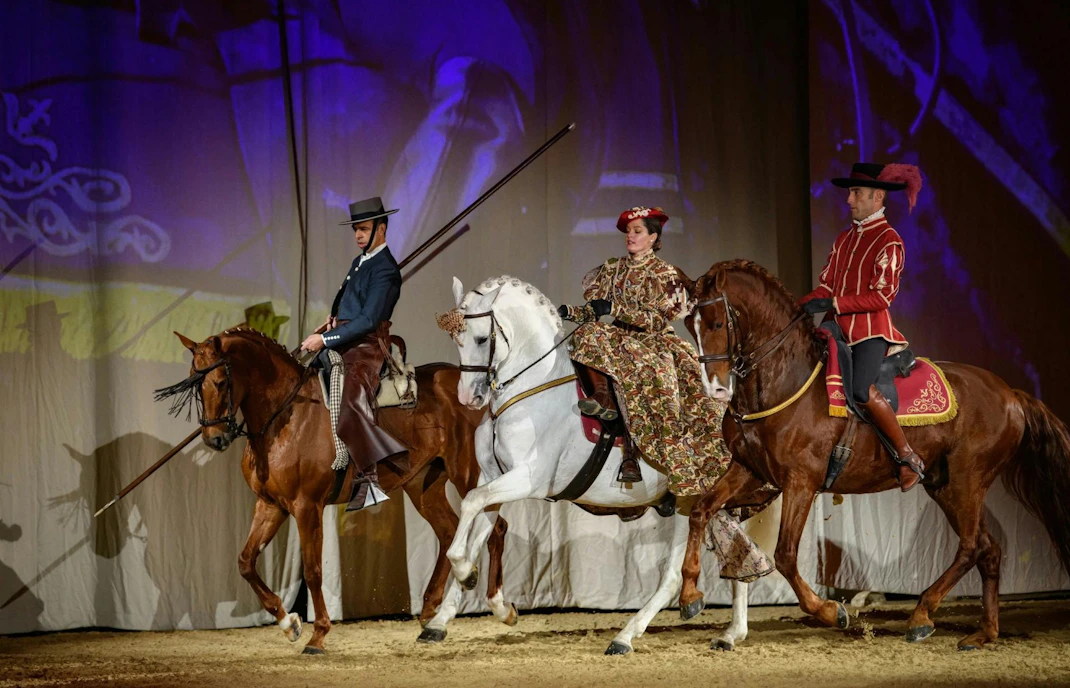
The Royal Stables were commissioned by Philip II in 1572 to breed horses for the Spanish Crown. After a major fire in 1734, the complex was rebuilt under Fernando VI. Its original royal purpose remains an important part of the venue's connection to Spanish equestrian traditions.
How easy the show is to follow without Spanish
You do not need much language ability to enjoy this performance. The show reads visually: you follow it through formations, pacing, music, rider cues, and the contrast between quiet collected movements and faster, crowd-pleasing passages. Even visitors with no background in dressage usually understand where the skill lies because the arena is small and the action is close. That makes it an unusually accessible cultural experience for international travelers in Córdoba — more about watching control and partnership than following a spoken narrative.
Frequently asked questions about Cordoba Equestrian Show
During the performance, no. Before or after, opportunities can be more relaxed, especially around the stable atmosphere, but the strict rule applies once the arena show is underway. Do not assume there will be an end-of-show photo call.
Sometimes, yes. Early arrivals, especially with earlier-entry tickets, often get a better chance of seeing horses close to the ring before the show begins, but it is not a guaranteed inclusion.
Yes. Strollers are allowed at the venue, and infants can attend, but they must stay seated on an adult’s lap during the performance. Because it is a live show, bring only what you can manage quietly and compactly.
Yes. This is a visual performance first, so you follow it through music, formations, and riding technique rather than dialogue. You will not miss the core experience if your Spanish is limited or nonexistent.
There is not a dedicated show car park confirmed for the venue, but paid city-center parking is available nearby, including options around Puerta Sevilla and the historic center. If you are already staying in old Córdoba, walking is usually easier.
Yes. The Royal Stables sit beside the Alcázar de los Reyes Cristianos and close to the Mosque-Cathedral area, so the show fits well after a late-afternoon walk, dinner, or monument visit rather than needing its own full evening.


