Tickets Cordoba

Is the Alcázar of Córdoba worth visiting?

Yes, especially if you want a compact monument that gives you more than one kind of experience. The Alcázar begins with thick fortress walls and cool stone rooms, then opens into courtyards, tower views, baths, mosaics, and gardens where water runs through long pools and channels.

It was built as a Christian royal residence and military fortress, but its site carries much older layers: Roman, Visigothic, and Islamic Córdoba all sit beneath or within the monument. That is what makes it feel less polished than a decorative palace and more like a working seat of power.

The payoff is contrast. You move from defensive walls to shaded gardens, from Roman mosaics to royal politics, from Columbus history to quiet fountains. It is not the most lavish palace in Spain, but it is one of Córdoba’s best short, layered visits.

Skip it if: you want grand furnished palace interiors, dislike stairs and uneven historic surfaces, or are visiting Córdoba in peak summer and only want fully indoor attractions.

What to see inside the Alcázar of Córdoba?

Terraced gardens at the Alcázar of Córdoba
1/7

Terraced Gardens

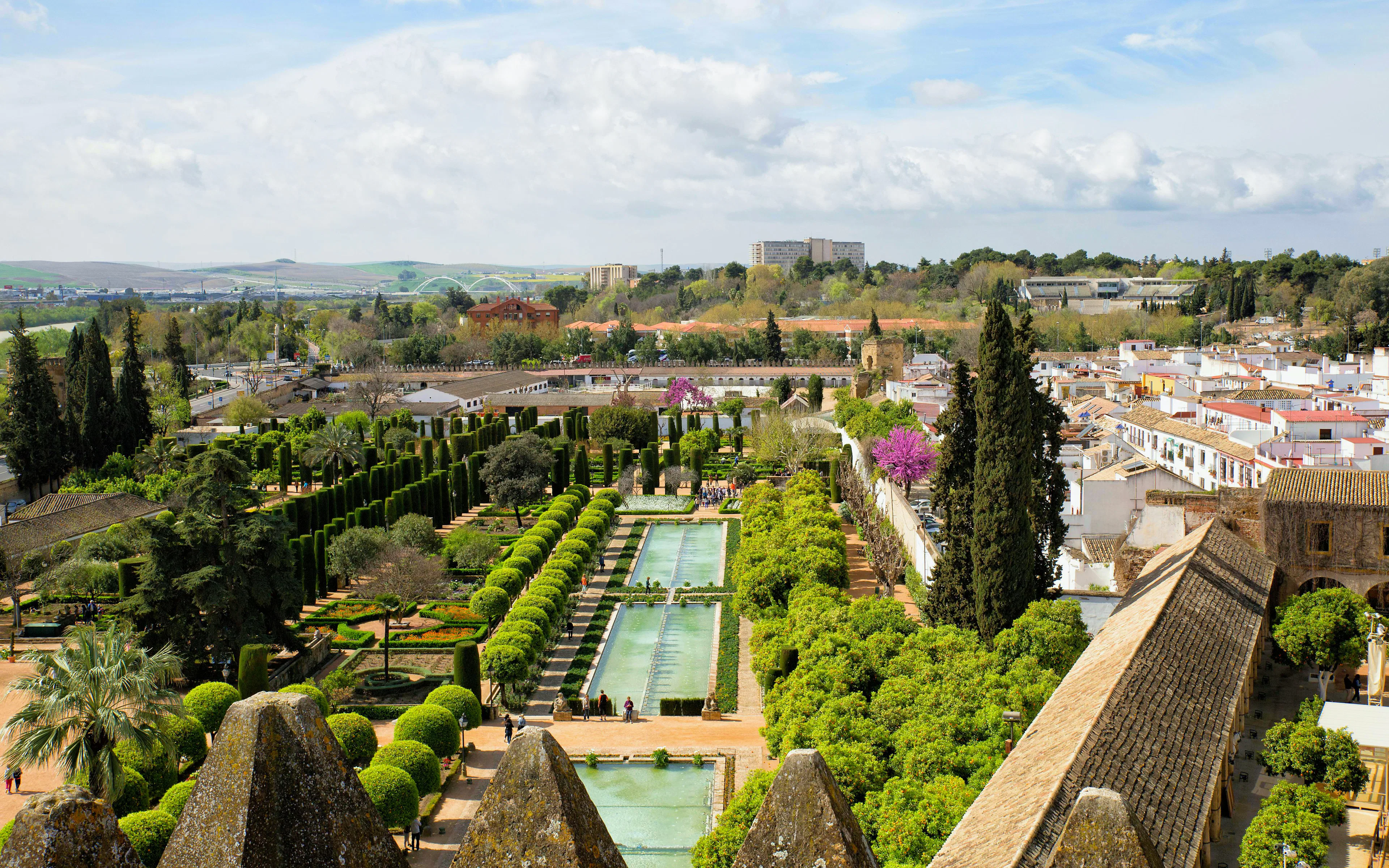
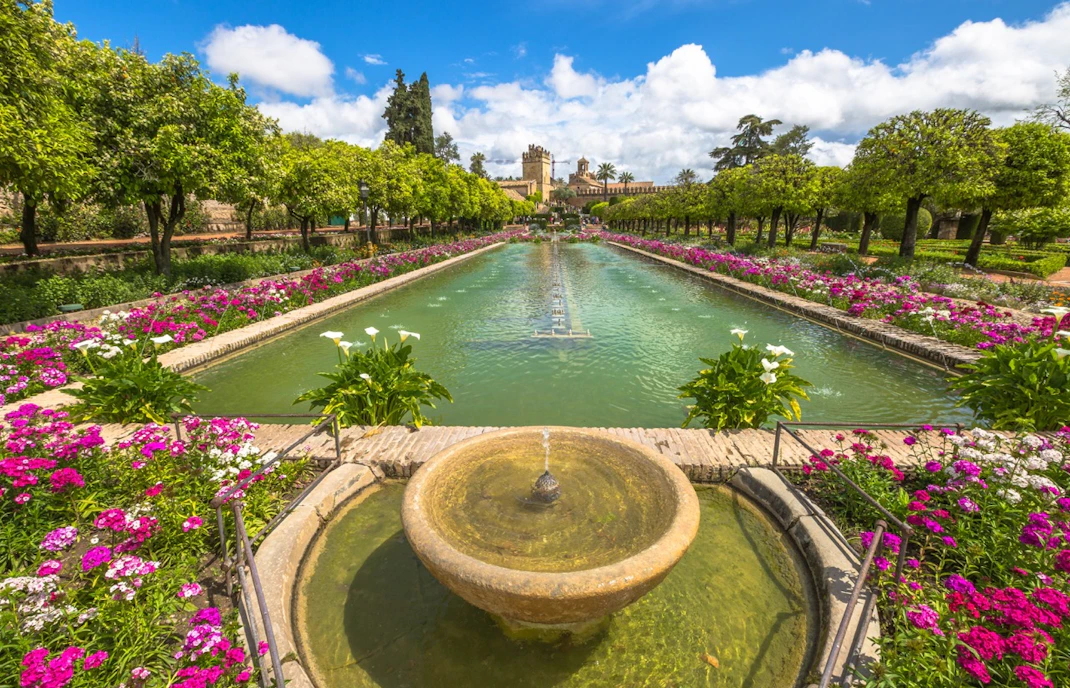
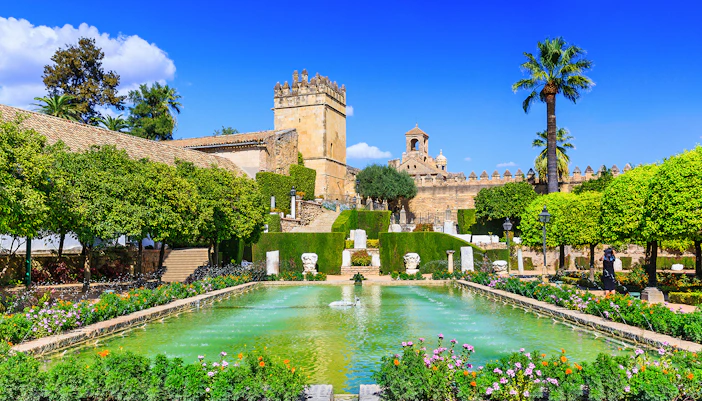
The gardens are the emotional center of the visit: clipped hedges, long pools, orange trees, and fountains arranged across terraces. Early morning and late afternoon are the most comfortable times, and most visitors stay here longer than they planned.

Tower of Lions

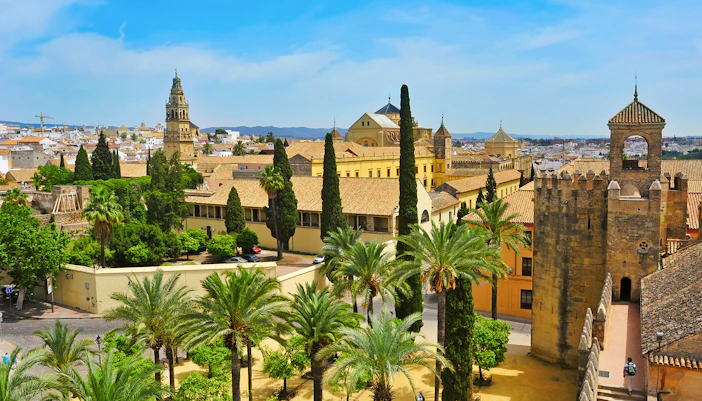
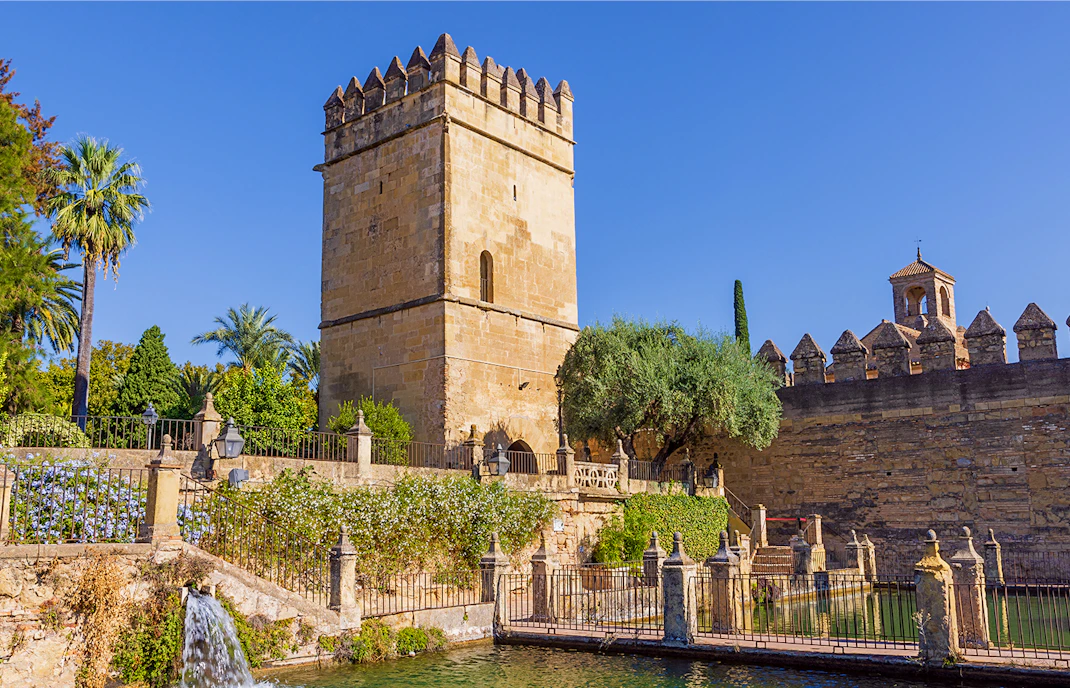
Climb the main entrance tower for the clearest view of the Mezquita-Cathedral, Jewish Quarter rooftops, and the Guadalquivir. The staircase is manageable for most visitors, but it is less pleasant in peak heat and busy midday slots.

Hall of Mosaics

This grand hall displays Roman mosaics recovered in Córdoba, turning the Alcázar into more than a medieval fortress. Spend a few minutes close up; the geometric borders and mythological scenes reward slower looking.

Patio Morisco

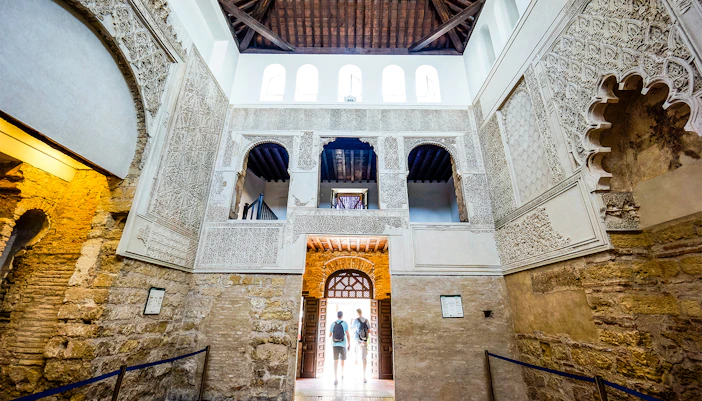
A compact courtyard divided by water channels and walkways, Patio Morisco shows the site’s Mudéjar sensibility at human scale. It is often quieter than the gardens, which makes it one of the easiest spaces to absorb.

Royal Baths

Below the palace are the Caliphal-style baths, with vaulted ceilings pierced by star-shaped skylights. They are easy to miss if you rush from tower to gardens, but they add a crucial layer to the site’s Islamic inheritance.

Promenade of the Kings

This garden walkway features sculptures of monarchs connected with the Alcázar’s history, including the Catholic Monarchs. It is one of the most photographed areas after the main pools.

Roman sarcophagus

Look for the 3rd-century Roman sarcophagus displayed inside the monument. Its carved relief shows the symbolic passage to the underworld through a half-open door.

How to explore the Alcázar of Córdoba

Suggested visit plan

Budget 1.5 to 2 hours for a satisfying visit. Add extra time if you want to climb the towers, pause in the gardens, or visit as part of a guided route with the Mosque-Cathedral and Jewish Quarter.

Start with the interiors first, especially the Hall of Mosaics, Roman sarcophagus, Royal Baths, and courtyards. These spaces are easier to appreciate before fatigue sets in. Then climb the tower if it is open and the weather is manageable. End in the gardens, where the pools, fountains, and tree-lined paths give the visit its calmest finish.
What to see and how to explore

  • Must-see: Hall of Mosaics, Royal Baths, Tower of Lions, terraced gardens, and Promenade of the Kings.
  • Optional: Quieter courtyard corners and tower details if you are short on time.
  • Guided vs self-paced: Self-paced works if you mainly want gardens and views. A guided tour adds value because the Roman material, Inquisition history, Columbus connection, and Catholic Monarchs’ role are not always obvious from the rooms alone.

Brief history of the Alcázar of Córdoba

  • Roman period: The site forms part of Roman Córdoba’s fortified and administrative landscape. Roman remains and later mosaics connect the Alcázar to this older city layer.
  • Islamic period: The area becomes part of the wider Umayyad/Caliphal palace complex near the Guadalquivir, later reused after the Christian conquest.
  • 1236: Córdoba is conquered by Fernando III. The former palace complex becomes a Christian royal residence, though it is in poor condition.
  • 1328: Alfonso XI orders the construction of the current fortress-palace, creating a Christian royal and military seat in Córdoba.
  • 1480s–1490s: Ferdinand and Isabella use the Alcázar while planning the final campaign against Granada. Conversations with Christopher Columbus also take place here before his first voyage.
  • Modern period: The Alcázar later serves as the headquarters of the Inquisition, then as a prison from 1822 to 1931, and later as a military site.
  • 1955: The complex is ceded to the Córdoba City Council and gradually restored as a monument.
  • Late 20th century: Restoration and conservation efforts continue, with the gardens redesigned and opened to the public, transforming the Alcázar into a major cultural and tourist site.
  • 1994: The Alcázar becomes part of the Historic Centre of Córdoba, which is declared a UNESCO World Heritage Site.
  • 21st century: The monument undergoes ongoing preservation work and hosts exhibitions, cultural events, and guided tours, remaining one of Córdoba’s most visited historic landmarks.

Architecture of the Alcázar of Córdoba

Fortress design and layout

The Alcázar is a fortress-palace rather than a decorative court palace. Its exterior is sober and defensive, with thick ashlar walls, an almost rectangular plan, and towers at the corners. Inside, the experience softens through courtyards, vaulted rooms, water channels, baths, and gardens.

Style and influences

The building’s style is best understood as Gothic military architecture shaped by Mudéjar and Islamic garden traditions. Stone walls and vaulted interiors create a sense of control and enclosure, while patios, pools, and planting soften the heat and sound of the city.

Architect

The current Alcázar was commissioned by King Alfonso XI of Castile in 1328. No single architect is strongly associated with the monument; its character comes from royal patronage, Christian military architecture, reused earlier structures, and craftsmen working in Gothic and Mudéjar traditions.

The Alcázar and Córdoba’s bigger story

The Alcázar matters because it compresses Córdoba’s history into one walkable monument. Roman remains, Islamic foundations, Christian royal power, the Inquisition, Columbus-era politics, prison history, and modern restoration all pass through the same site. It is not just a garden stop after the Mezquita; it is a map of how Córdoba changed hands, identities, and functions across centuries.

Frequently asked questions about the Alcázar of Córdoba

Yes. It is compact, varied, and easy to pair with the Mezquita-Cathedral. You get gardens, tower views, Roman mosaics, royal baths, and major political history in one visit.